Zibo, Shandong · Refining additives & industrial water treatment

Why can a cheaper chemical make the whole system cost more?

Shuoji looks beyond unit price. We evaluate dosage, upset operation, sludge disposal, equipment maintenance and shutdown risk as part of the total cost per tonne of oil or water.

Fewer blind trialsLess upset downtimeLower hidden cost
Refining process application sceneIndustrial wastewater application sceneMembrane systems application sceneTesting and trials application sceneTechnical service application scene
Refining processApplication scene

From chemical price to total operating cost.

4core cost categories assessed together
2proprietary technology platforms
1technical review loop

Products & solutions

From refining processes to industrial water treatment,
products are matched to real operating conditions.

Coverage includes refining process additives, cooling and boiler water chemicals, membrane chemicals, industrial wastewater bacteria, Nilijing and EBF biological-enhancement technology. Selection and application support are based on the unit, water quality and operating objectives.

Refining Process Additives application scenePRODUCT 01
01

Refining Process Additives

DemulsifiersCorrosion inhibitorsScale inhibitorsPolymerisation inhibitors

For oil-water separation, corrosion, scaling and stable unit operation.

Focus: dosage · downstream corrosion · unplanned shutdownsDiscuss product selection
Ethylene & Styrene Additives application scenePRODUCT 02
02

Ethylene & Styrene Additives

Compressor inhibitorsStyrene inhibitorsNeutralisersCorrosion support

For polymerisation risk, acidic corrosion and long-cycle unit operation.

Focus: polymerisation risk · cleaning cycles · unplanned shutdownsDiscuss product selection
Cooling & Boiler Water Chemicals application scenePRODUCT 03
03

Cooling & Boiler Water Chemicals

Corrosion/scale inhibitorsBiocidesBiodispersantsOxygen scavengers

For heat-transfer efficiency, system cleanliness and equipment life.

Focus: chemical use · cleaning frequency · maintenanceDiscuss product selection
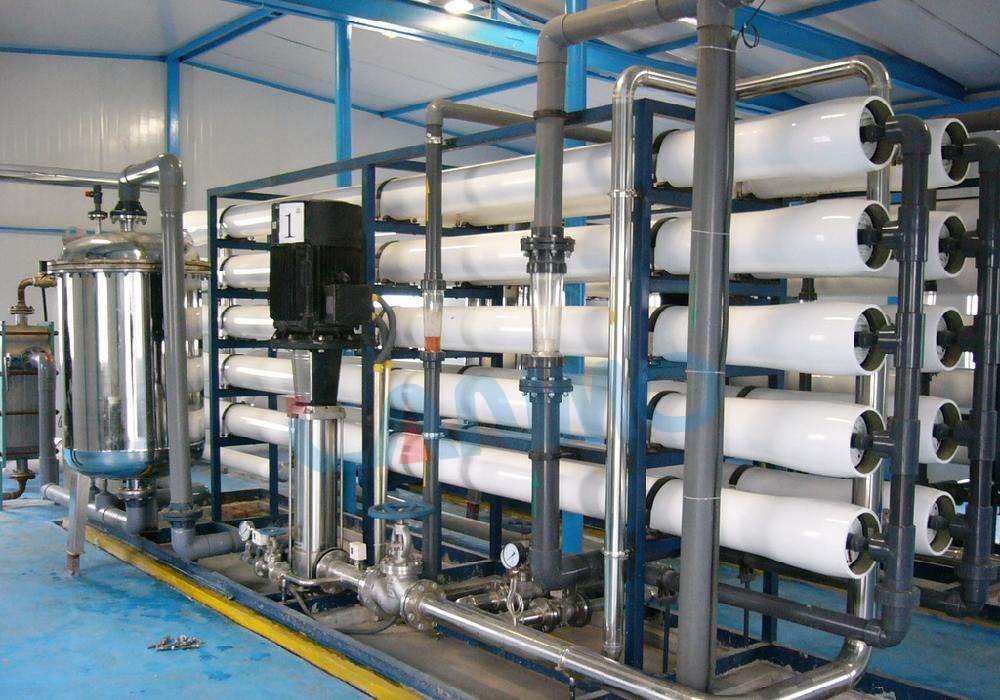
Membrane System Chemicals application scenePRODUCT 04
04

Membrane System Chemicals

RO antiscalantsBiocidesReducing agentsCleaning & flocculation

For membrane fouling, scaling, cleaning and stable water production.

Focus: cleaning cost · membrane life · downtimeDiscuss product selection
Industrial Wastewater Bacteria application scenePRODUCT 05
05

Industrial Wastewater Bacteria

COD bacteriaAmmonia bacteriaTotal nitrogen bacteriaStart-up & recovery

Matched to water quality, loading and biological-system conditions.

Focus: recovery time · compliance stability · repeated trialsDiscuss product selection

The difference is not the packaging. It is the decision process.

How is the Shuoji approach different
from conventional chemical supply?

Customers do not need another drum of chemical. They need fewer trials, more stable operation and a technical process that can be reviewed.

ComparisonConventional supplyShuoji approach
Purchasing decisionCompare price per kilogram firstCompare total cost per tonne of oil or water
Upset responseChange products after the problem appearsEvaluate normal baselines and upset data together
Technical deliveryProvide a model, quotation and dosageProvide validation steps, operating boundaries and review points
Experience captureKnowledge remains with one personCases return to ChemAI for future retrieval

From unit price to system cost

The useful comparison is
total cost per tonne of oil or water.

Chemicals are only one part of the cost. Dosage, upset operation, sludge disposal, cleaning and maintenance, and shutdown risk jointly determine the final system cost.

Refining unit operating sceneSystem operating scene
SYSTEM COST VIEW

Total system cost is more than the price of one drum.

ChemicalsShutdownsSludgeMaintenance

Shuoji turns a one-off purchase price into a long-term operating view, so purchasing, production and technical teams can discuss the same cost picture.

Open cost calculator

What customers actually pay for

Invisible costs often exceed the quoted price.

01Cost per tonne

A lower unit price can still mean a higher treatment cost

The useful comparison is not the price per kilogram, but the final chemical consumption per tonne of oil or water and the burden carried into downstream operations.

02Upset losses

Recurring upsets hide shutdown and labour costs

Sludge bulking, effluent fluctuations, desalting upsets and membrane scaling all raise maintenance, overtime, lost production and restart costs.

03Trial and time cost

Repeated trials do not become reusable experience

When every issue starts from zero, previous water quality, operating conditions, dosage and results cannot support a faster decision next time.

04Whole-process cost

A better local metric can make the whole system work harder

A single indicator can hide sludge volume, downstream load, equipment life and discharge risk. A cheaper local result is not necessarily a lower system cost.

Put every cost on the same ledger

How much could your system
be overspending each year?

Use one cost basis for chemical consumption, shutdowns, sludge and failed trials, helping purchasing, production and technical teams find the most important optimisation priorities.

Calculated locally. No data uploadedYour entries are calculated only in this browser.
  • Chemical dosage and annual usage
  • Direct chemical cost per tonne of water
  • Hidden costs from shutdowns, sludge and failed trials
Cost calculator

Enter the data you know

Current annual chemical costCN¥118,80020.0 kg / day
Current direct chemical costCN¥0per tonne of water
Annual difference at 15%CN¥17,820for internal cost comparison
Contact the technical team with these figures

ChemAI + industrial operations

This is not another question-answering chatbot.

It first retrieves authorised customer records, unit background, normal baselines and historical cases. AI then forms a preliminary analysis before the Shuoji technical team reviews it.

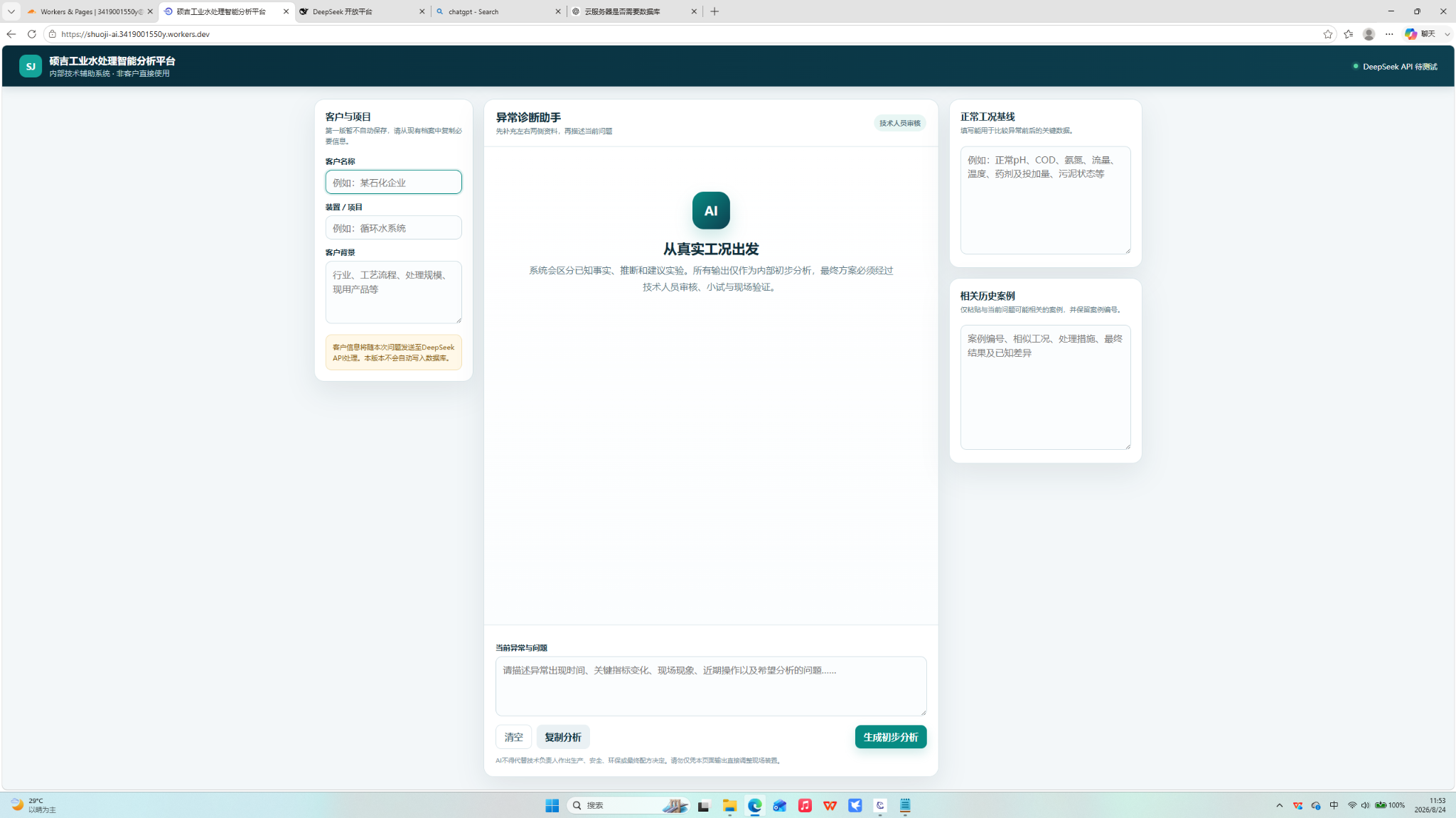
SJInternal technical platform in operation
Live system interface
Shuoji intelligent technical service platform interface
The internal test system already includes customer records, intelligent diagnosis and case history. Access is protected by Cloudflare Access.
01No repeated customer-data entry

The internal team maintains core records; field staff only add what happened this time.

02Historical experience is reusable

Every issue, validation step and result returns to the record for future use.

03AI does not bypass technical review

AI proposes an initial investigation order; engineers remain responsible for conclusions and implementation.

From problem to verified result

Turn “recommend a product” into
a verifiable technical loop.

Use data for selection, field results for validation and continuous optimisation to reduce system operating cost.

01
DETECT

Testing & records

Record the unit, water quality, normal baseline, upsets and treatment history.

02
DIAGNOSE

AI diagnosis + technical judgement

Combine customer records and historical experience into a clearer investigation order.

03
VALIDATE

Bench and field validation

Use reproducible data to compare dosage, indicators and system impact.

04
LEARN

Review and case capture

Write results back into the record to accelerate the next decision.

Proprietary technology

Not a repackaged product,
but a focused answer to the hardest part of the system.

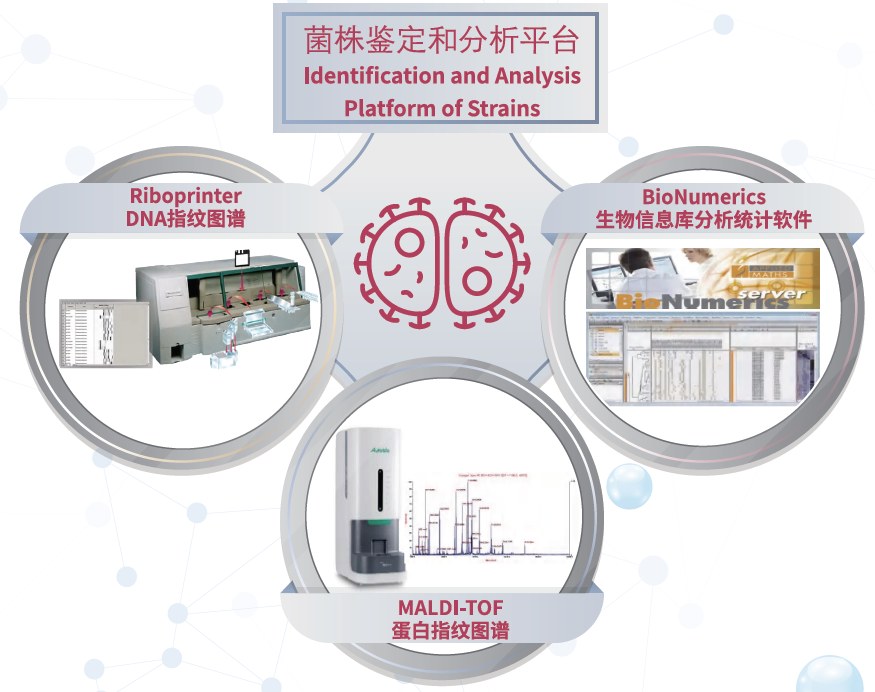
Shuoji has developed two proprietary technology platforms around sludge characteristics and refractory wastewater, connecting technical principles with real application logic.

Shuoji-owned brand

泥立净 (Nilijing)

More than sludge pressing: sludge characteristics, settling performance and downstream disposal cost are considered together.

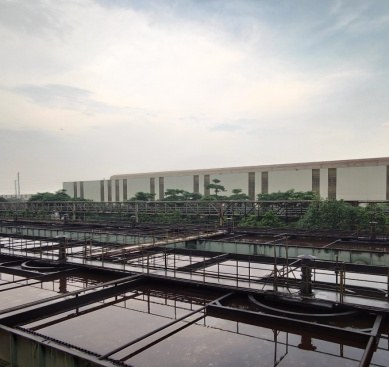
Industrial wastewater treatment sceneIndustrial wastewater scene
Upset conditionTurbid supernatant
Nilijing
Improvement targetStronger floc settling
  • For sludge bulking, poor settling and turbid supernatant
  • Matched to toxicity, loading and on-site conditions
Shuoji proprietary technology

EBF refractory-wastewater technology

Not simply a bacterial product: pollutant characteristics, microbial capability and biological-system conditions are matched together.

R&D and validation sceneR&D and validation scene
01Contaminant profileWater quality & biodegradability
02Microbial matchingTolerance & degradation pathways
03System validationBench tests & operating follow-up

Principle illustration · no partner images or branding

  • For complex COD, ammonia and total-nitrogen biological-treatment problems
  • Validation results return to the case library to reduce repeated trials

Capabilities & application scenarios

Visible operating environments,
tied to real technical problems.

Across refining units, industrial wastewater, membrane systems, testing and R&D, Shuoji organises products, decision methods and technical support around the operating scenario.

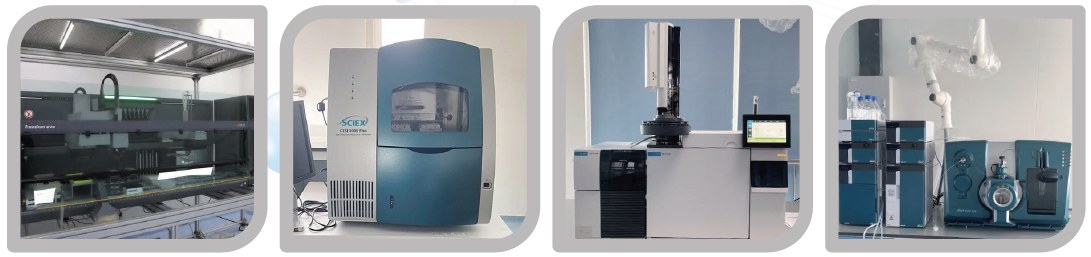
Refining units application sceneIndustrial wastewater application sceneMembrane systems application sceneTesting and R&D application scene
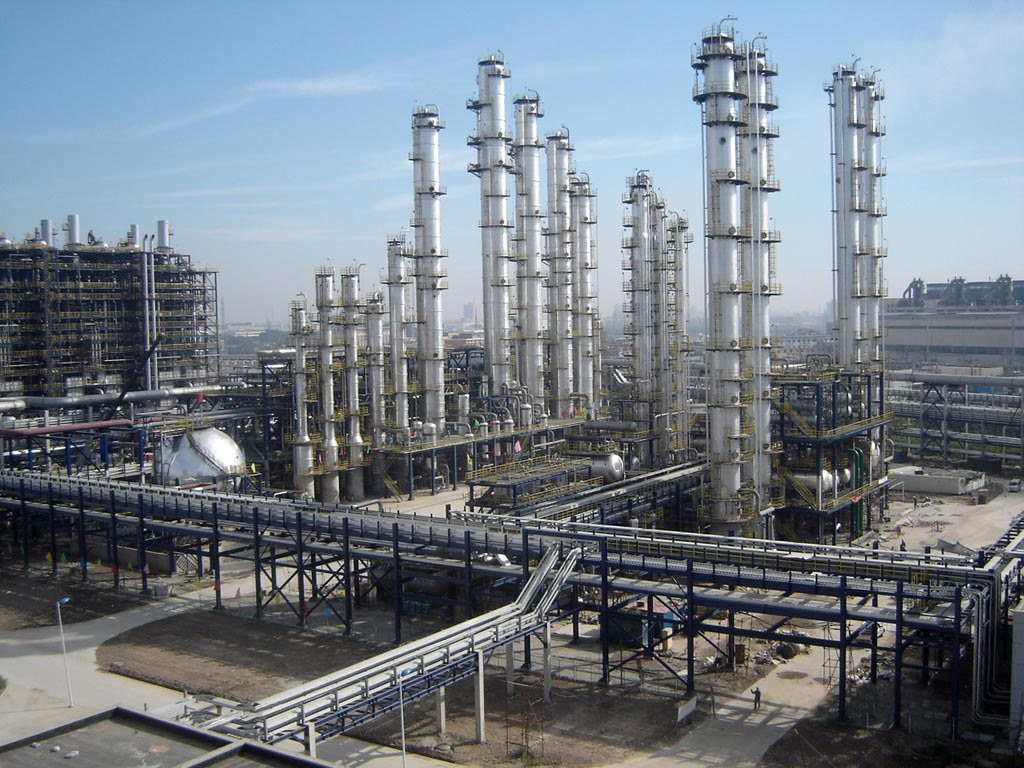
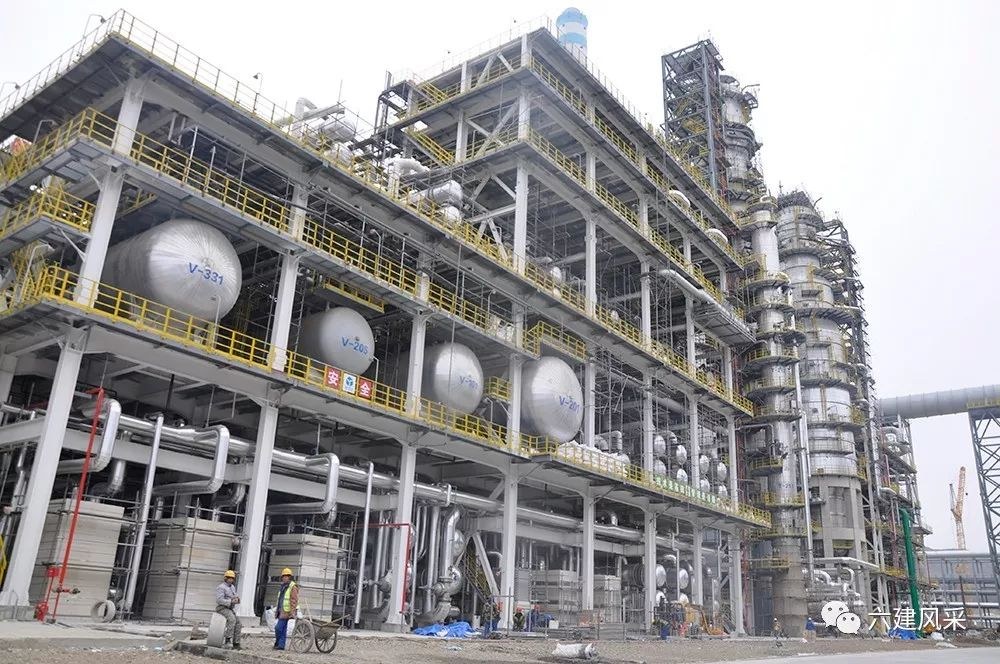
Refining unitsApplication scene
SHUOJI FIELD VIEW

Selection starts from the actual operating conditions

Address oil-water separation, corrosion and scaling, polymerisation risk and long-cycle operation.

Trust comes from a reviewable process

Every selection and optimisation
is supported by data.

Based in Zibo, Shandong, Shuoji provides products, technical service and continuous operating optimisation for refining, chemical and industrial water-treatment applications.

Shuoji service modelDirect · Professional · Traceable
Direct service

Products and technical support are managed by Shuoji

The Shuoji team directly handles requirement discussions, product selection and application follow-up.

Experience capture

Project experience becomes a continuing technical record

Unit details, water quality, upsets and treatment results are retained to support future decisions.

Data basis

Technical decisions are built on testing and records

Test data, field records and stage results support selection, validation and continuous optimisation.

Turn the problem into a clear cost picture

Fewer blind trials,
less upset downtime.

Tell us the single most important problem you want to solve. Our technical team will identify the data required and the next practical step.